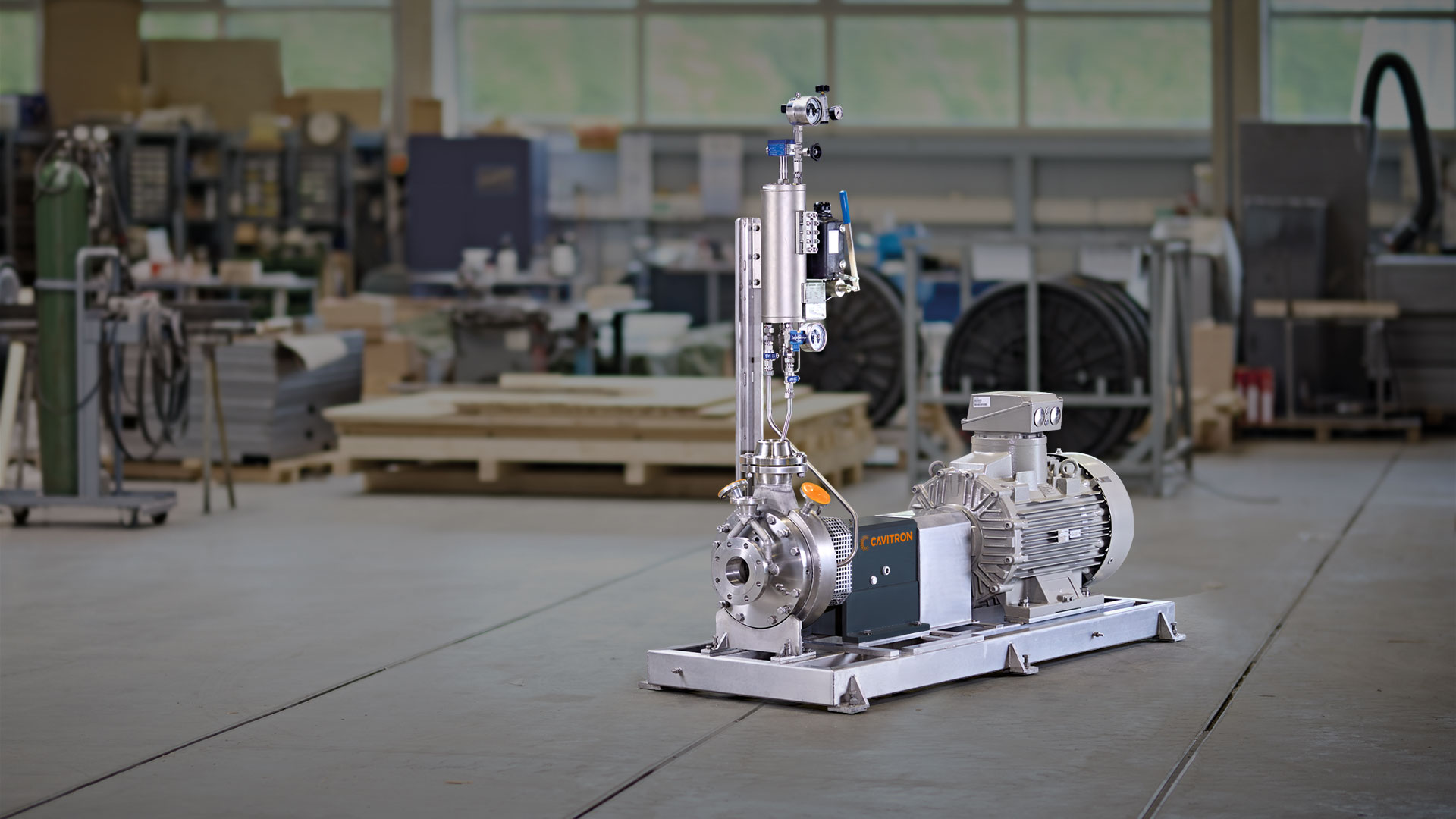
Inline homogenisers for bitumen and polymers
Continuous high-shear processing for PmB systems
Producing polymer-modified bitumen (PmB) requires controlled dispersion of polymers such as SBS in a highly viscous medium. Shear intensity, mass transfer and process control are decisive.
The Cavitron CD inline processor provides size reduction and homogenisation within the bitumen-polymer process. Machine configuration and operating conditions are matched to the formulation and required binder properties.
The challenge: dispersing polymers in bitumen
Bitumen modification places demanding requirements on process equipment:
- High viscosity
- A tendency towards phase separation in some formulations, including SBS systems
- Agglomeration when dispersion is inadequate
- Extended mixing and maturation times in batch processing
Insufficient dispersion can compromise morphology, storage stability and performance in service. Polymer compatibility and subsequent swelling are also important.
The solution: inline homogenisation with Cavitron CD
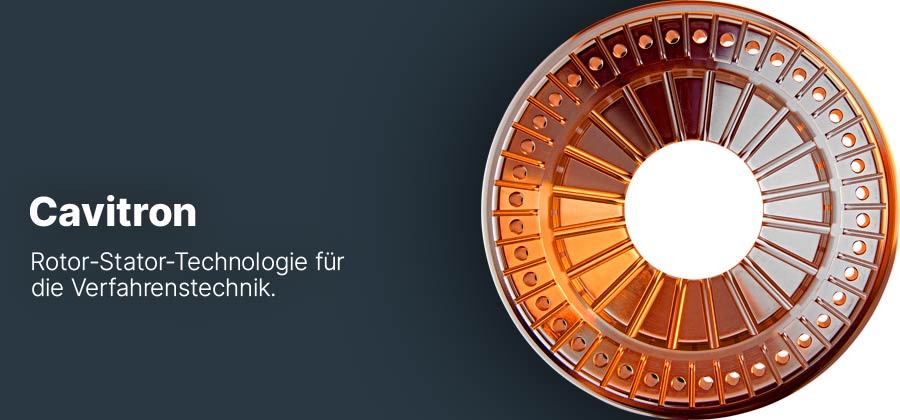
The Cavitron CD rotor-stator system produces intensive shear and turbulence in a defined gap. Size reduction and dispersion increase the contact area between polymer and bitumen, supporting polymer uptake and subsequent swelling.
- Controlled polymer size reduction and dispersion
- Increased interfacial area
- Improved contact between the polymer and bitumen
- A defined processing stage within a reproducible PmB process
Forced flow conveys the product through the active zone. The required number of passes, temperature profile and maturation time depend on the formulation. Fine dispersion alone does not guarantee storage stability or eliminate subsequent maturation.
Customer benefits at a glance
1
Adaptable process intensity
2
Integration of process stages
3
Reproducible product preparation
4
Compact inline equipment
5
Temperature and pressure control
6
Targeted energy input
7
Closed processing
Benefits in detail
- Adaptable process intensity: rotor-stator geometry and operating conditions can be matched to viscosity, polymer type and concentration.
- Integration of process stages: size reduction, dispersion and homogenisation can be combined in an inline machine. Any required swelling or maturation remains part of the overall plant design.
- Reproducible product preparation: controlled feed and operating conditions support consistent dispersion and binder quality.
- Compact equipment: inline processing can reduce the space required for the mixing stage. Actual plant size depends on feed systems, tanks and the complete process chain.
- Temperature and pressure control: monitoring and control in a defined processing zone support dispersion while limiting thermal damage to the polymer.
- Targeted energy input: energy is applied at the rotor-stator working zone. Feasible polymer concentrations depend on viscosity, conveyability and heat removal.
- Closed processing: an enclosed system helps contain the product and reduce losses. Seals and ancillary systems must be selected for the operating conditions.
For equipment selection, specify the base bitumen, polymer grade and concentration, throughput, process temperature and target binder properties. This allows Cavitron to assess machine configuration, trials and integration into the PmB plant.
Technical configuration
Operating limits and materials must be selected for the actual formulation and machine configuration. The general Cavitron range below is not a blanket operating specification for every application.
Static seals: Viton, Teflon, Kalrez and other elastomers, subject to chemical compatibility.
Operating pressure: application-dependent configurations up to 100 bar; standard range up to 10 bar.
Operating temperature: application-dependent configurations up to 250 °C; standard range up to 150 °C. The permissible product temperature may be lower.
Performance and energy input: consult the Cavitron type overview (PDF in German).
Drives and transmission: three-phase and high-frequency motors, mechanical gear units, variable-speed drives, V-belt and poly-V belt drives according to the design.
Process intensity: rotor-stator geometry and operating conditions are selected for the mixing or dispersion duty. Achievable product characteristics require application-specific assessment.
Bearings: tapered roller bearings or double angular-contact ball bearings according to the machine configuration.

engineered.